
How much does brush removal cost in Ohio?
Brush removal cost in Ohio depends on what the brush is and where it goes. At regional market rates, typical residential mulching jobs land in the low thousands per acre. Light brush costs far less than dense regrowth. Brush that is already cut and piled is a different job, and hauling it is priced by the load.
For a public benchmark, OSU Extension’s Ohio Farm Custom Rates 2026 put Clearing Land at $208.85 an hour on average. Bush Hogging averaged $99.06 an hour, and Bulldozing averaged $164.64. The survey summed up answers from 343 farmers, custom operators, farm managers and landowners. These are Ohio custom farm rates that show the spread.
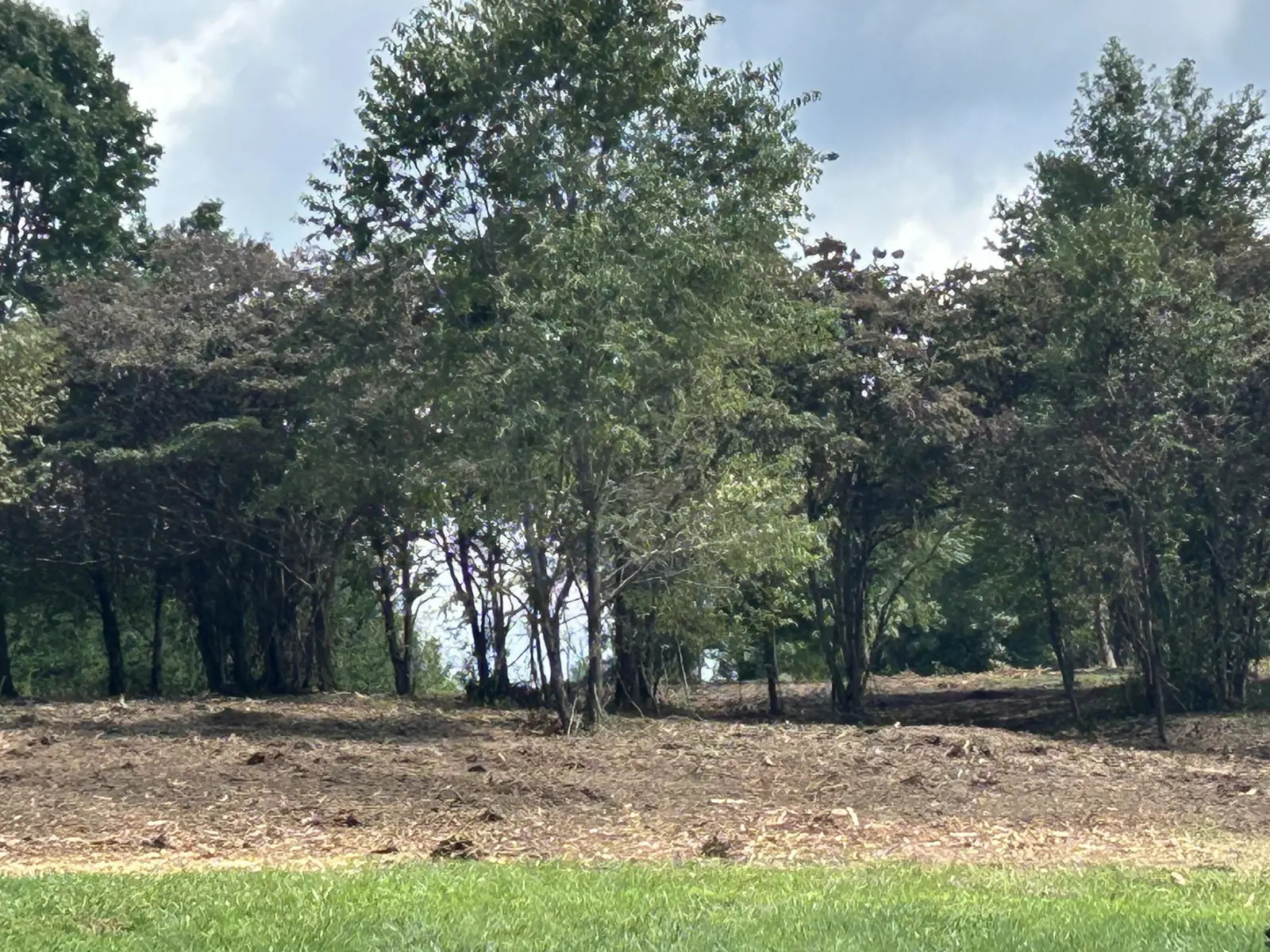
Our brush removal work grinds standing brush into wood chips right where it grew. Topsoil and roots stay in place, so the ground is stable the day the crew leaves. Our price for a job comes in a free written estimate after an on-site look. It holds unless the scope changes.
What do Ohio custom rates say about brush clearing costs?
OSU Extension’s 2026 custom rates show a wide spread for clearing work in Ohio. Clearing Land averaged $208.85 an hour, with a median of $150. Bush Hogging, the survey’s name for brush hogging, averaged $99.06 an hour, with a median of $90. Each rate includes the machine and its fuel, plus the labor.
| Operation | Average per hour | Median per hour | Range per hour | Responses |
|---|---|---|---|---|
| Clearing Land | $208.85 | $150 | $100 to $500 | 13 |
| Bulldozing | $164.64 | $150 | $75 to $300 | 14 |
| Bush Hogging | $99.06 | $90 | $20 to $200 | 16 |
Each line rests on 13 to 16 responses, so read the numbers as a spread. The top Clearing Land rate was five times the lowest one. The top Bush Hogging rate was ten times the lowest. In all three lines the average sits above the median, which is the middle answer.
Use the survey to judge an hourly quote. An hourly rate does not tell you how many hours a thicket will take.
Bulldozing is in the table for comparison. Some clearing jobs push brush into piles with a dozer, and those piles still need hauling, grinding or burning. Our equipment is a tracked mulcher, a brush hog and chainsaws for hand work. We price mulching per job, in writing, after an on-site look.
What moves the price of brush removal?
The brush itself sets most of the price. Grass and weeds cost the least to clear. Briars, multiflora rose and saplings take longer, and trees past about 6 inches are slower still. Density, acres, slope, wet ground and access change the machine time, and keeper trees add careful work.
- What the brush is. Grass and weeds mow quickly. Briars and multiflora rose grow into thick, thorny walls. Saplings take more grinding, and stems of 6 to 10 inches go slower.
- How dense and how many acres. Our machine covers roughly half an acre to two acres a day, depending on density. A thin stand moves fast. A thicket moves slowly, and the price follows the time.
- Access, slope and wet ground. The tracked machine handles slopes, soft spots and steep ground better than wheeled gear. Wet spring clay is the one season we sometimes steer around, because the machine can leave ruts.
- Keeper trees. Every keeper tree is flagged and worked around. A tight stand with many keepers takes slower, careful passes.
- Fence rows. Fence row work is quoted by the length and the growth. A thin row of saplings costs far less than a row of mature osage orange. Along a fence that stays, the crew cuts the growth off the wire by hand with chainsaws.
- Standing or already cut. Standing brush gets ground where it grows. A pile of cut brush is its own job.
- Where the debris goes. Ground in place, the brush stays on your land as wood chips. Hauling adds a charge for each load, and burning falls under Ohio’s rules.
What are the three ways to get rid of brush, and how is each priced?
There are three usual ways to get rid of brush. A brush hog mows light growth, priced by the hour or the acre. A forestry mulcher grinds dense brush and saplings in place, for a written price per job. Cutting and piling, then hauling or burning, runs by the hour plus by the load.
| Brush situation | The usual tool | How it is priced | What pushes the price up |
|---|---|---|---|
| Grass, weeds and light briars in open ground | Brush hog | By the hour or by the acre | Thicker growth, rough or wet ground |
| Briar and multiflora rose thickets | Forestry mulcher | A written price per job after an on-site look | Density, acres and slope |
| Saplings and young trees up to about 6 inches | Forestry mulcher | A written price per job after an on-site look | Stem count and keeper trees to work around |
| Underbrush beneath trees you are keeping | Forestry mulcher working between keeper trees | A written price per job after an on-site look | Tight spacing and many keeper trees |
| Trees past about 6 inches | The mulcher takes 6 to 10 inch stems slowly and selectively; a tree service takes bigger trees | Bigger trees are priced by a tree service | Trunk size and the number of big trees |
| Brush already cut and piled | Hauling, chipping, or burning where the law allows | By the hour plus by the load | More loads and more hours of loading |
Mowing with a brush hog. A brush hog is a heavy rotary cutter, and it fits light growth in open ground. In the OSU survey, Bush Hogging had the lowest hourly average of the three lines. Our guide to what brush hogging costs in Ohio covers that price in detail. Once growth turns into thick, woody stems, it is mulcher work.
Grinding in place with a forestry mulcher. This is our main service. The tracked mulcher grinds briars, thickets and saplings into a layer of wood chips right where they grew. Nothing is burned, piled or hauled off the property. Inside a woodlot, the same machine does underbrush removal between the trees you are keeping.
Cutting, piling, and hauling or burning. A crew cuts the brush and piles it, then hauls it off or burns it. The cutting is usually billed by the hour and the hauling by the load.
Ohio limits burning. State law prohibits most open burning in unincorporated areas during set months and hours. Ohio’s open burning rules lays out the dates and hours.
Grazing is another option some landowners weigh. Our guide to goats vs forestry mulching compares the two.
What does it cost to get rid of brush that is already cut?
Brush that is already cut and piled is a disposal job. Hauling runs by the load, and burning is limited by Ohio law. Hauling a pile of cut brush is not part of our work. Whether it can be ground where it lies is decided at the estimate, after we see the pile.
Check what your town or county offers before you pay to haul a pile. Mansfield’s fall leaf pickup notice says city crews will not pick up limbs or brush. The Richland County Regional Solid Waste Management Authority manages a yard waste composting facility. It gives residents a place to discard grass, leaves, shrubs and other plant material.
On its open burning page, ODNR suggests other ways to get rid of yard waste, such as composting. Local governments and fire departments may have their own burn rules too. Check with them before you light a pile.
How big can brush get before it turns into tree work?
Our tracked mulcher grinds brush, briars, saplings and trees up to about 6 inches across, right where they stand. Stems of 6 to 10 inches go slower and are often workable selectively. Larger timber is tree-service work, and a tree service prices it. Stumps are ground 1 to 2 inches below grade, never dug out.
That size line moves the price. A stand of thin saplings grinds fast, while larger stems in the same acre add hours. Stumps ground low can be mowed over, and the roots stay in the soil. For a whole wooded parcel, see our guide to land clearing cost per acre in Ohio.
How do you get a firm price for brush removal?
Ask for a free written estimate after an on-site look. We look at the brush, the ground and any keeper trees, then put the price and timeline in writing. That price holds unless the scope changes. Most residential jobs run one to three days, and the crew leaves stable ground covered in wood chips.
Late summer through winter is prime clearing season. Frozen or dry ground carries the machine cleanly. We are an insured LLC, and our four-man, family-run crew brings 5 years of combined experience. Once the ground is open, a brush hogging pass on a seasonal schedule keeps it that way.
If briars, thickets and saplings have taken over ground you want back, see our page on clearing overgrown brush. Call or text (614) 359-8762, or ask for a free estimate. We are based in Mansfield and work up to 75 miles out across north central Ohio.