
Who has to clear the fence row in Ohio, and who pays for it?
Chapter 971 of the Ohio Revised Code covers partition fences: fences on the line between two owners. Each owner keeps brush, briers, thistles and noxious weeds cut four feet back on their own side. An existing fence is kept up in equitable shares. A brand new fence is paid for by whoever builds it. Township trustees settle disputes.
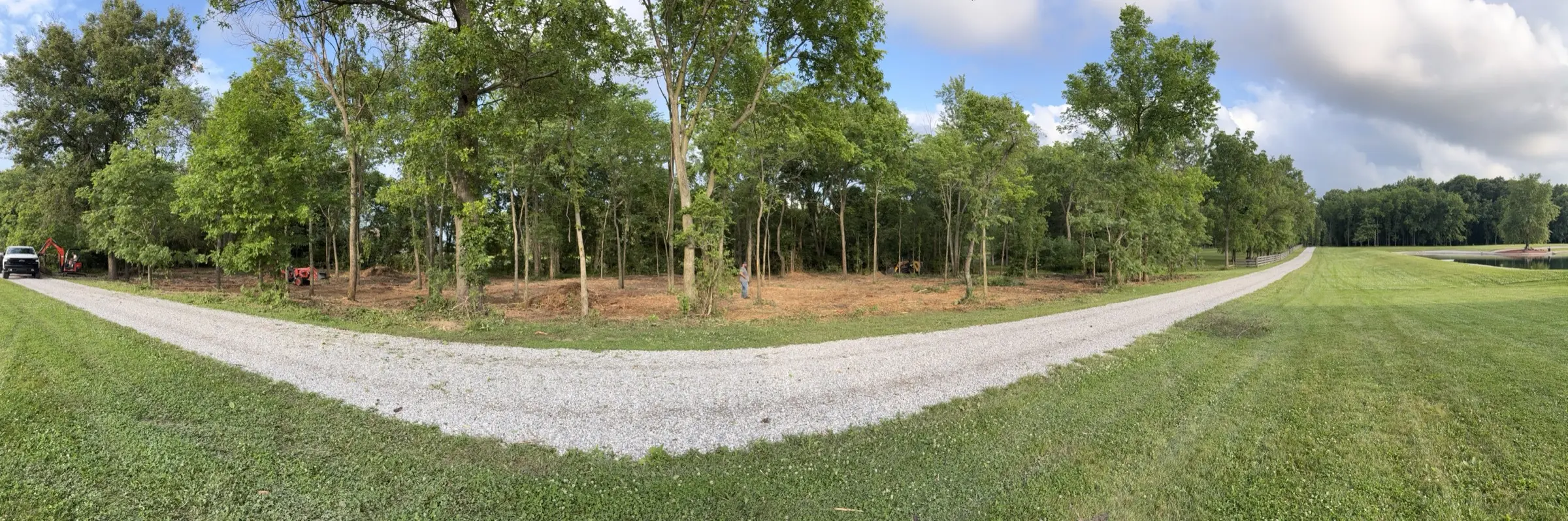
That four foot strip is the part people trip over. It is a duty in the code, livestock or not. The fix is fence line clearing that grinds the row where it stands.
What does Ohio’s line fence law cover?
It covers partition fences: a fence sitting on the division line between the adjoining properties of two owners. The current version took effect September 30, 2008. The chapter does not reach lots inside a village or city. It also skips properties laid out into lots outside a municipality.
One line in the definitions matters more than it looks. The code says building a fence and keeping it in good repair include any necessary clearing of land. Clearing the row is part of the fence job.
Where livestock are kept along a division line, the code calls for a preferred partition fence. That is woven wire, standard or high tensile. It carries one or two strands of barbed wire, set at least 48 inches off the ground. Fences built before the 2008 date are exempt from that standard.
Owners who want different rules can write them down. A written agreement can say no fence is needed, or set different duties. File it with the county recorder. It runs with the properties and binds the next owner.
Who pays for a fence between neighbors in Ohio?
It depends on whether a fence is already there. If a partition fence exists, both owners maintain it in good repair in equitable shares. If no fence ever existed and one owner wants one, that owner bears the cost of building and maintaining it. Equitable does not mean half.
The owner who paid for a brand new fence is not stuck forever. If the adjoining owner uses that fence to hold livestock within thirty years, the builder can claim a share back. The claim shrinks by one thirtieth each year. That requires an affidavit of costs filed with the county recorder first. Skip it and the owner forfeits the right to reimbursement.
Pulling a fence out has its own rule. An owner must tell the adjoining owner in writing at least 28 days ahead. No owner may push debris from the removal onto the adjoining property without a written agreement.
When owners cannot agree, there are two doors. One is an action in the court of common pleas where the owner resides. The other is a complaint to the board of township trustees. They give all adjoining owners at least ten days written notice, then come look.
The trustees then split the job in equitable shares. They weigh topography, streams, the presence of trees, vines or other vegetation, trespasser risk and the livestock. Either owner has thirty days to ask for binding arbitration. Ignore the assignment and the trustees hire the lowest responsible bidder. The cost then becomes a lien collected as other taxes.
Who has to keep the fence row clear of brush?
You do, on your own side. The code says an owner of land next to a partition fence keeps the fence corners cut. It also covers a strip four feet wide on that owner’s side of the line. Brush, briers, thistles and other noxious weeds all count. Vines and trees planted for use do not.
The remedy runs through the township, and it ends in a bill. If the owner or tenant will not cut, the owner on the other side gives them notice first. The code sets that at not less than ten days to cut or remove the growth.
After the ten days, that owner may notify the board of township trustees. The trustees come out and view the premises. If they find just cause of complaint, they have it cut. The work goes to the lowest bidder or a private contract.
Then the bill arrives. The trustees certify the cost to the county auditor. The auditor places the amount upon the tax duplicate, and it is collected as other taxes. The fence row gets cut and it shows up on the tax bill.
What can the township do about noxious weeds?
More than most landowners expect, and on a shorter clock. Ohio Revised Code 5579.05 is a separate law from the fence row rule. It starts when the township trustees get written information about noxious weeds on a parcel. The trustees notify the owner. Within five days the owner must cut the weeds or show why there is no need.
The notice goes by certified mail when the address is known. Miss the five days and the trustees cause the weeds to be cut or destroyed. The cost then becomes a lien upon the land, collected as other taxes.
So which plants actually count? Ohio Revised Code 5579.04 points to any plant designated a prohibited noxious weed by the director of agriculture. That list is Ohio Administrative Code 901:5-37-01, effective February 16, 2025, and it names 31 plants. The ones you meet in a north central Ohio fence row are Canada thistle, poison hemlock and wild parsnip. Musk thistle, cressleaf groundsel, Japanese knotweed, kudzu and Johnsongrass are on it too.
Grapevines are on it with a condition attached. They count only when growing in groups of one hundred or more, unpruned and unmaintained for two consecutive years. A few wild grape vines do not meet that test.
Here is where a lot of local advice goes wrong. Multiflora rose is not on the noxious weed list. Neither is autumn olive, and neither is bush honeysuckle. All three sit on a different rule. That is the Ohio invasive plant list, Ohio Administrative Code 901:5-30-01, effective February 13, 2023.
The invasive plant rule is a sales rule. It says no person shall sell, offer for sale, propagate, distribute or import those plants in Ohio. It expressly allows you to dispose of the plant and to control it.
Chapter 971 still reaches that rose. Rose and briars inside the four foot strip are brush. Brush is what the fence row rule says to cut. Clearing rose and honeysuckle out of the row is the same machine work either way.
| Situation | Who acts or pays | Where in the code |
|---|---|---|
| A brand new fence where none stood | The builder pays; an affidavit filed with the county recorder keeps a claim alive thirty years | ORC 971.07 |
| A fence that already exists | Both owners maintain it in equitable shares | ORC 971.06 |
| Repairs one owner will not make | The other owner goes to the trustees or the common pleas court | ORC 971.09, 971.16 |
| Brush in the fence row | Each owner cuts the corners and four feet on their own side | ORC 971.33 |
| A fence row nobody will cut | Ten days notice, then the trustees; the auditor bills the tax duplicate | ORC 971.34, 971.35 |
| Noxious weeds on the parcel | Five days after the trustees notify you, then they cut and lien it | ORC 5579.05 to 5579.07 |
How does a fence row get cleared without wrecking the fence?
By matching the tool to the fence. Where the fence is coming out anyway, the tracked mulcher runs the row. It grinds the growth into chips where it stands. Where the fence is staying, the growth comes off the wire by hand with chainsaws. The machine never runs into a fence that is staying.
Old wire hiding in brush is the variable that decides the plan. Steel is hard on a mulching head, so the crew looks at the ground with you first. That gets settled at the free written estimate.
The chips stay where they fall. Nothing is burned, piled or hauled off the property. Topsoil and roots stay in place, so the row is stable the day the crew leaves.
Already have a pile of cut brush along the line? Whether it can be ground where it lies gets decided at the estimate. Burning is the other route. Ohio’s open burning rules shut down daytime burning outside town in March, April, May, October and November.
Multiflora rose and honeysuckle resprout from the stump. The realistic plan is to mulch once, then hold the corridor down with brush hogging once a year. We do not spray, and we do not haul brush away.
| Method | What it handles | What is left behind | Risk to a fence that stays |
|---|---|---|---|
| Brush hog | Tall grass, weeds and light brush | Cut stems on the ground | Low, but it needs room to swing |
| Forestry mulcher | Brush, briars, saplings and trees to about 6 inches | A chip layer, stumps 1 to 2 inches below grade | High against standing wire, so it runs rows coming out |
| Chainsaw hand work | Growth tight against wire, posts and keeper trees | Cut material to grind | Low, the tool for a fence that stays |
| Herbicide, a method others use | Resprouts after a mechanical pass | Standing dead stems for a season | None to the wire, but we do not spray |
What does fence row clearing cost, and when should you do it?
Fence row work is quoted by the length and the growth. A thin row of saplings costs far less than a row of mature osage orange. Regional market rates sit in our fence line clearing cost guide. The price and timeline come in writing after an on-site look, and they hold unless the scope changes.
Late summer through winter is prime clearing season here. Frozen or dry ground carries the machine cleanly and leaves a tidy row. Wet spring clay is the one stretch the crew steers around.
One calendar item matters if trees are coming out. Tree cutting is best kept to the Oct. 1 to Mar. 31 window, because of roosting bats.
Most residential jobs run one to three days. A long row of heavy multiflora rose or osage orange goes slower than open brush.
If the strip on your side has turned into a hedge, that is the work. We can have the fence row ground back to a clean corridor so the wire and the boundary show again. Arguments over who pays belong with your township trustees. Trees on the line are a separate question, and a real fence fight belongs with an attorney.
Call or text (614) 359-8762, or ask for a free estimate. We are based in Mansfield and work 75 miles out across north central Ohio.