
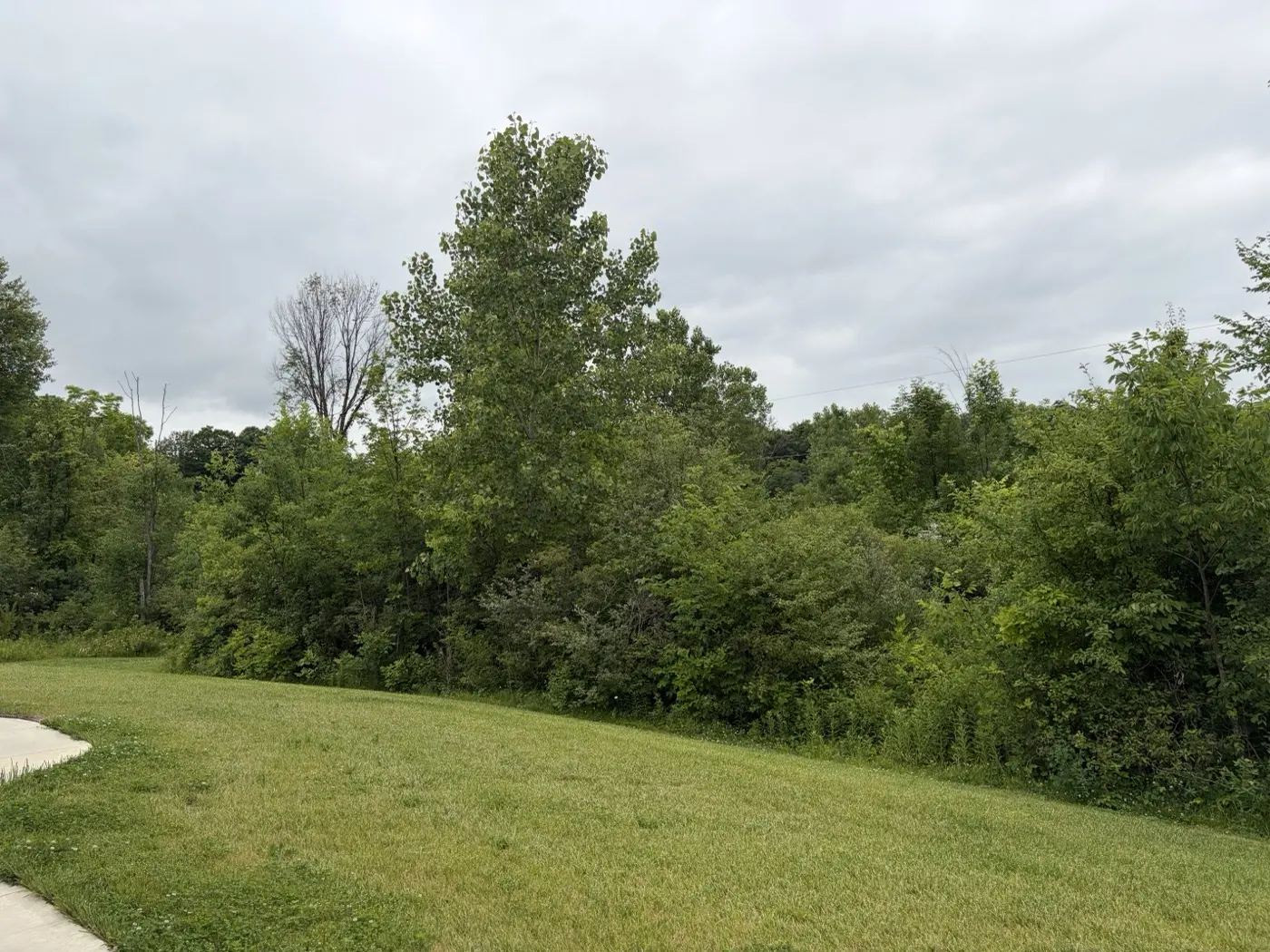
How do you reclaim an overgrown pasture in Ohio?
The plan that works is short: mulch the woody growth, then mow to hold it. A forestry mulcher takes a rose-choked Ohio pasture back to open ground in one pass, and an annual brush hog cut keeps it open for a small fraction of the reclaim cost. Everything else, timing, seeding, and spot treatment, hangs off those two steps.
Here is the full sequence we walk landowners through on pasture reclamation jobs around Mansfield.
Step 1: Be honest about how far gone the field is
Ohio pastures get lost on a schedule. A year idle is weeds. Three years is briars and multiflora rose islands. Seven years is a connected thicket with autumn olive and volunteer cedar standing head-high, and after a decade you have young woods. Where your field sits on that timeline decides the tool.
Still mostly grass with light stems? A heavy brush hog cut is the whole fix, and it is the cheapest work we do. Established woody growth, stems thicker than a couple inches, rose walls you cannot walk through? Mowing will just bounce off it. That field needs a mulching pass first.
| Field condition | The right first move | Typical cost picture |
|---|---|---|
| Tall grass, weeds, stems under 2 in. | Brush hog cut | Often a few hundred dollars for several acres |
| Rose islands, brush clumps, scattered saplings | Mulch the woody areas, mow the rest | Mixed, quoted from a walk |
| Solid thicket, cedar, stems 3 in. and up | Full forestry mulching pass | Commonly $1,500 – $3,500 per acre in Ohio |
Step 2: Mulch the woody growth, and leave the soil alone
The reason we reclaim with a mulcher instead of a dozer comes down to what the field needs afterward: soil. A dozer takes the brush and the topsoil together, leaves bare dirt that gullies in the first hard rain, and piles debris you still have to deal with. The mulcher grinds everything where it stands, so the sod remnants and root mat stay put under a protective chip layer, and the field is walkable the day the machine loads up.
Stumps grind to an inch or two below grade, which matters more than it sounds: it is what makes the follow-up mowing possible. A reclaimed field full of six-inch stubs cannot be brush hogged. A mulched one can.
Step 3: Time the work for firm ground and weak regrowth
Late summer through winter is the reclamation window in north central Ohio. Dry August ground and frozen January ground both carry a tracked machine without rutting, and cutting brush at the end of its growing season means the roots head into winter weakened, with no season left to respond. As a bonus, working outside spring also keeps you clear of ground-nesting season, when fields are full of active nests.
The window we avoid is the wet spring clay. Heavy equipment on saturated ground trades a brush problem for a ruts-and-compaction problem, and no honest contractor should offer you that trade.
Step 4: Get grass growing back
A mulched field wants to grow something next season, and the cheap trick is to make sure it is grass. Frost seeding, broadcasting seed onto the freeze-thaw cycles of late winter, works well over a fresh chip layer and costs little. In many fields the old sod fills back in on its own once the shade is gone. Either way, give the forage one growing season before real grazing pressure goes back on.
Step 5: Hold it with one cheap habit
This is the step that decides whether you ever pay for reclamation again. The rose and honeysuckle roots under a reclaimed field will push thin resprouts the next season. Mowed once or twice, those sprouts die back and grass wins. Ignored for a few seasons, they rebuild the thicket. An annual brush hogging pass costs a small fraction of a reclaim, and it is the entire difference between fields that hold and fields that cycle.
Stubborn patches of multiflora rose and autumn olive sometimes justify targeted spot treatment on the resprouts. Used that way, on fresh regrowth, small amounts go a long way. Your county extension office can point you to current recommendations for both species.
What a reclaim actually costs
Budget with the table above and the per-acre detail in our Ohio mulching cost guide. The short version: light fields mow cheap, woody fields mulch for a few thousand per acre, and the annual maintenance cut afterward is the least expensive insurance in land ownership. If you are staring at a field somewhere between those, that is what the free walk-through is for.
Frequently asked questions
How do I restore an overgrown pasture?
Mulch the woody growth first, then hold the ground with mowing. A forestry mulcher grinds rose thickets, brush, and saplings back to open ground in one pass, and a yearly brush hog cut keeps the regrowth from ever reestablishing. Skipping the follow-up mowing is how pastures get lost twice.
What is the cheapest way to clear an overgrown field?
If the field is still grass and light stems, a brush hog cut is by far the cheapest reset, often a few hundred dollars for several acres. Once real woody growth is established, mulching costs more up front but beats hand-clearing, burning, or dozer work on total cost, and it leaves the soil intact.
How long before livestock can graze a reclaimed pasture?
Plan on one growing season. Mulch in late summer through winter, let the grass reestablish through spring, run a maintenance mow that first year, and put real grazing pressure on it the following season. The ground is walkable immediately. The forage needs the year.
Will multiflora rose come back after mulching?
It will try. Mulching removes the standing thicket and weakens the roots, and the thin resprouts that follow are easy to kill with a mowing pass or targeted spot treatment. One season of follow-up is usually the difference between a pasture that holds and one that slides back.
When is the best time of year to reclaim a pasture in Ohio?
Late summer through winter. The ground is firm or frozen so equipment leaves no ruts, the plants are done growing so regrowth is weak, and you are set up to frost-seed and start spring with grass instead of brush.
Walk your field with us
Every reclaim starts the same way: standing in the field, figuring out how far gone it really is. If your pasture is within 75 miles of Mansfield, request a free estimate or call E&S Forestry at (614) 359-8762 and we will build the plan around your ground.