
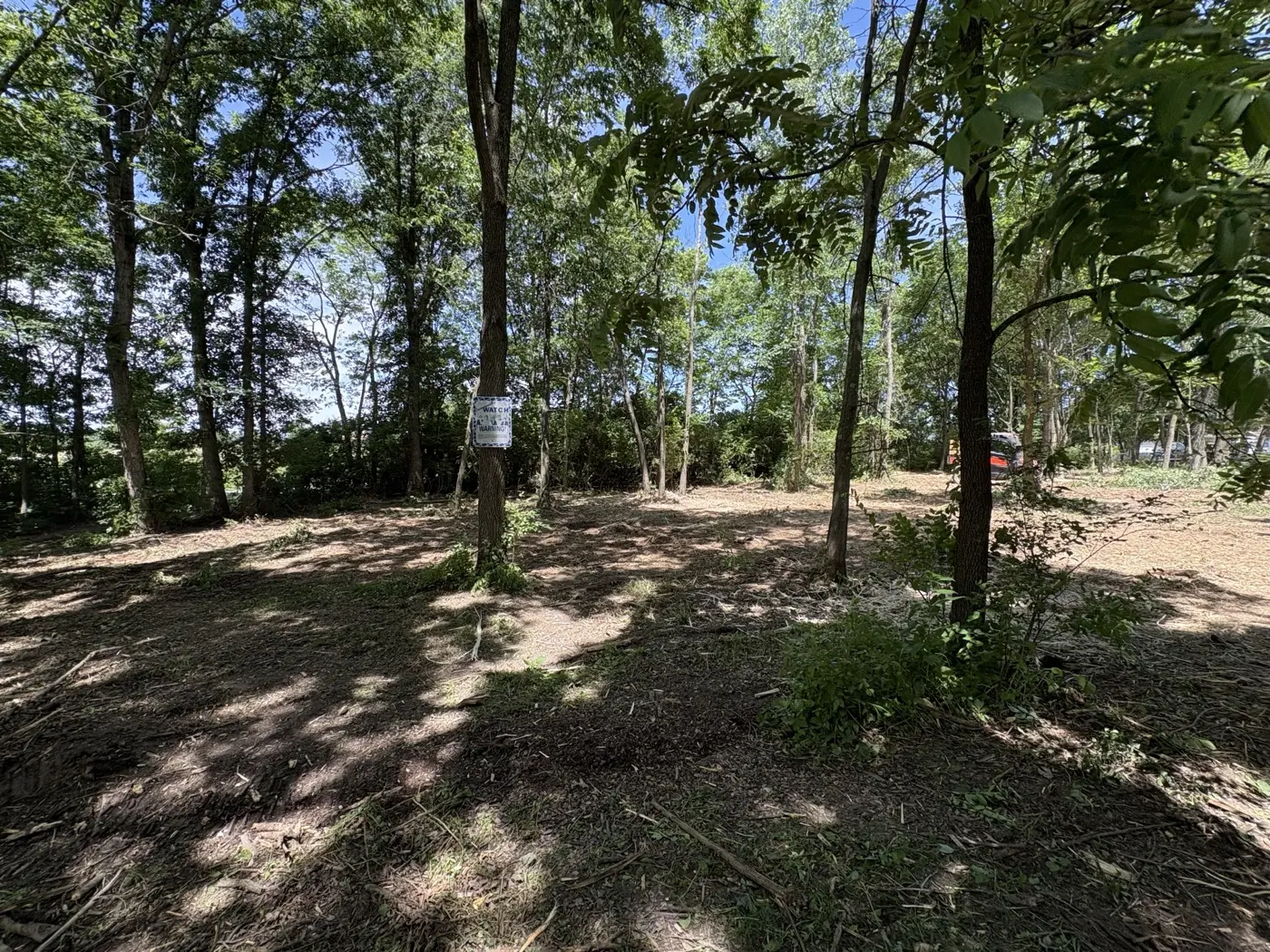
How do you cut a trail through wooded property, and what does it cost?
Pick the width first: 4 to 6 feet for a walking trail, 8 to 12 feet for anything with wheels. Then the cost follows the hours a machine spends grinding that corridor through whatever is growing in the way, at the standard mulching market rates of $150 to $400 per hour. Nobody publishes a believable per-foot price for trail work because no two hundred feet of woods are the same, and we will not invent one here.
Our trail clearing estimates are free, and a trail quote is the fastest one we do: walk the route, read the growth, count the hours.
Width is a one-time decision, so make it once
The most common trail mistake is cutting a footpath and then buying a side-by-side. Widening a trail costs nearly what cutting it did, because the machine comes back for a second full pass. Decide what will ever travel the trail, a hunter on foot, a UTV, a tractor hauling firewood, and cut for the biggest of them the first time. Corners want extra width, and low limbs want trimming higher than feels necessary in August, because snow load brings them down a foot.
What the mulcher does that a chainsaw weekend cannot
A chainsaw opens a line of sight. A mulcher builds a corridor: brush and saplings ground to chips, stumps taken down to grade so nothing catches an axle or an ankle, and the surface left as a firm chip bed instead of a stump field. The machine works stem by stem, so the oaks that make the woods worth walking stay exactly where they stand, and the understory that needed thinning anyway comes out as part of the pass.
The chip bed is the quiet advantage. It sheds regrowth for a season or two, keeps the line walkable in wet weather, and marks the trail plainly enough that guests and kids stay on it.
Hunting land: access is the upgrade
Ask anyone who has dragged a buck four hundred yards through multiflora rose what a trail is worth. Access trails through hunting ground earn their cost in ordinary use: reaching stands quietly and on a predictable scent line, moving cameras and feed without a machete, getting a deer out with a cart instead of a war story. Trail edges also become structure, game uses the soft edge cover along a cut the way they use any edge, which is why stand sites near trail corners work.
Cut hunting trails in late summer at the latest. A corridor mulched in August is settled, quiet, and scent-neutral by opening day, and the ground is usually at its firmest for the machine.
The maintenance math
Year one buys the trail: machine hours through standing growth. Every year after costs a mowing pass, the same cheap maintenance as any field, because the chip bed and the canopy shade hold most regrowth back. Skip three or four years and the woods take the corridor back, and you are buying year one again. A trail plus an annual pass is one of the cheapest permanent improvements wooded land can get.
If there is a back woodlot you have not visited since spring, that is the sign. The estimate walk is free, and we will flag the route with you.